
How to Run a Poker Night at Sea Without a Single Hitch
The production timeline our own producers use: from the first supplier call to the trophy presentation, covering blind structures, catering windows, boarding flow and the mistakes that only show up on water.
Ask our producers what separates a smooth poker night from a scrambled one and the answer is never the cards. It is the clock. A poker tournament at sea is three events sharing one evening: a boarding operation, a dinner service and a structured card competition, and each one is on a timer that does not care about the other two.
This is the timeline we actually run. It assumes a four-hour charter boarding at 18:00, but the proportions scale to any format. Follow it and the only thing left to chance on the night is the flop.
Lock the Structure Before Anything Else
Every decision downstream depends on the tournament clock, so the blind structure gets decided first. For a four-hour evening you want roughly three and a quarter hours of play, which at 20-minute levels means nine levels plus breaks. That window fits a 40 to 80 player freezeout comfortably.
Rebuy formats eat time and attention. If your crowd skews social, keep the rebuy window to the first three levels and announce it as part of the fun rather than a rule. If the field is experienced, skip rebuys entirely and use the saved hour for a better dinner break.
Catering Runs on the Tournament's Terms
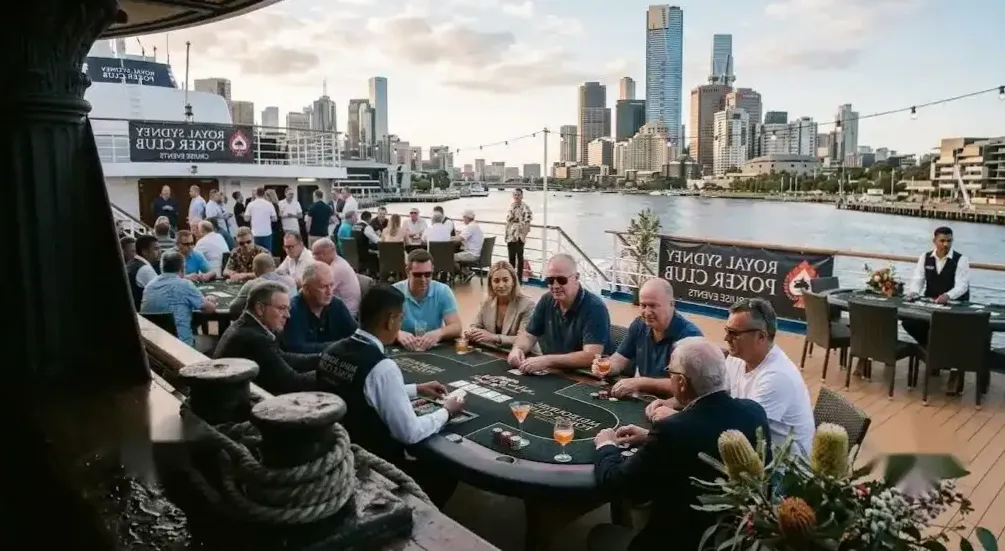
The single most common mistake is booking a seated dinner that collides with level four. On our charters the dinner break is a scheduled tournament break, the floor stops, and everyone eats for forty minutes. Trying to plate service around live hands doubles the staffing and halves the quality of both.
Canapé service during play works if the food is one-handed and greaseless. Sliders fail, skewers work, anything with a sauce drizzle is a disaster on felt. The dessert course lands during the bubble, which is when the room's attention is off the food anyway.
A poker night is a dinner party wearing a costume. Feed them like guests, not like an audience, and the cards take care of themselves.
Boarding Is the First Impression
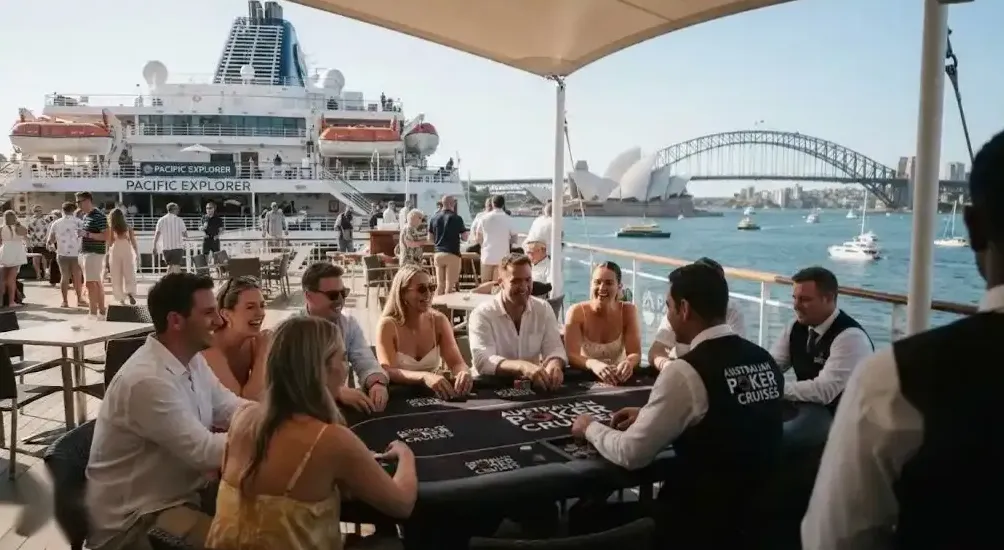
The twenty minutes between gangway and cards-up sets the room's energy for the night. Our rule is that no guest holds a chip within ten minutes of boarding; drinks come first, then the learn-to-play session for beginners, then seating.
Field Notes
- Seat draw cards at the registration desk, not at the table. Removes confusion before it starts.
- Learn-to-play runs during welcome drinks. Beginners arrive relaxed instead of arriving late.
- Announce the structure once, clearly, before cards. Repeat only the prize details.
- Dealers handle table disputes. The host never rules on a hand in front of their guests.
The Last Ninety Minutes
From the money bubble to the trophy, the room compresses naturally. This is when the rail forms, when eliminated players become spectators, and when the best photographs of the night happen. Give the final table a lighting change or a staging cue, present the trophy before the last guests reach the gangway, and the evening ends on a peak rather than a dribble. Then send the winners home with something they can put on a shelf, because the story of the night gets told through the trophy every time someone visits their office.
If You Only Remember Three Things
- Decide the blind structure first; every other decision hangs off the clock.
- Dinner is a scheduled break, not a parallel event competing with the cards.
- Stage the final table like a ceremony. The last image is what guests remember.
Renata Kowalski
Renata has directed more than four hundred tournaments across card rooms and charters. She writes the blind structures for every event on our calendar.
Ready to Write Your Own Story?
Everything in this guide happens better on the water. Tell us about your event and a producer will map it inside one business day.